On May 14, 2026, the United States Supreme Court issued a unanimous decision that could have significant implications for victims of commercial truck accidents. As truck accident lawyers, this is a subject matter near and dear to our hearts.
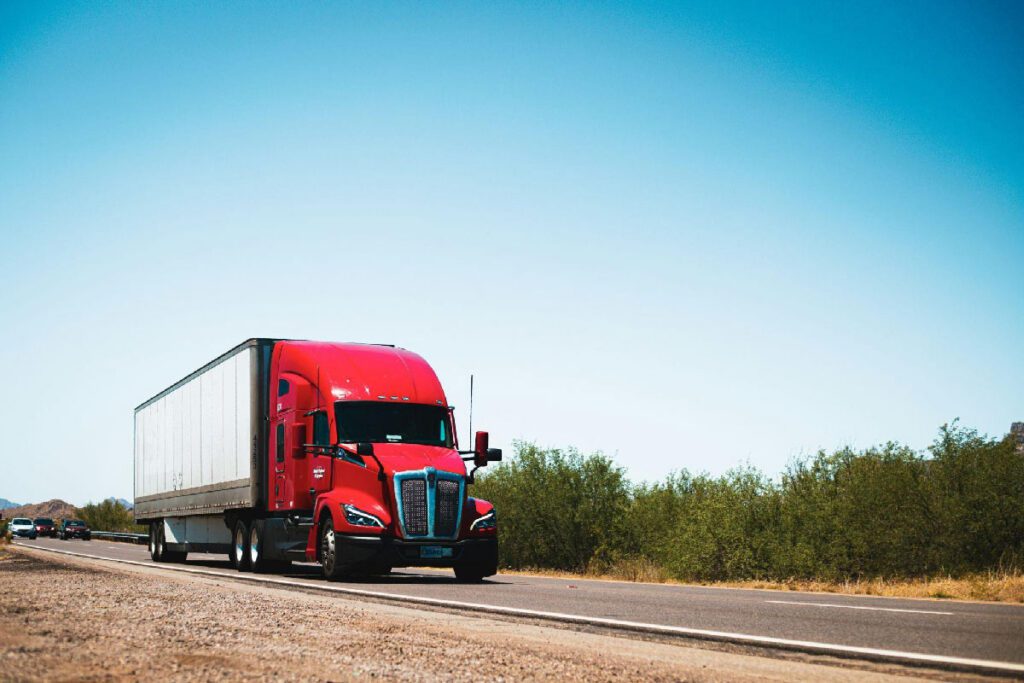 The case in question, Montgomery v. Caribe Transport II, LLC, involved a serious truck collision, an injured driver, and a question of who can be held responsible when a trucking company causes an accident.
Specifically, the Court considered whether freight brokers, the companies responsible for connecting businesses with commercial carriers, could face legal consequences for hiring a trucking company with a questionable safety record.
The Supreme Court ultimately ruled that federal law does not automatically protect freight brokers from certain negligent-hiring claims arising from truck accidents.
But what exactly does that mean, and why is this decision important for injured drivers?
Let’s take a closer look.
What Happened in Montgomery v. Caribe Transport II, LLC?
The case began when Shawn Montgomery suffered serious injuries in a collision involving a commercial truck operated by Caribe Transport II, LLC.
However, the lawsuit wasn’t focused solely on the truck driver or the trucking company. It also involved C.H. Robinson, a freight broker that had selected Caribe Transport to transport goods.
Freight brokers act as intermediaries, connecting businesses that need products shipped with commercial carriers capable of transporting them. Part of this process involves evaluating carriers, including their reliability and safety records.
In Montgomery v. Caribe, Montgomery alleged that C.H. Robinson overlooked warning signs about Caribe Transport’s safety record before selecting the company.
According to the lawsuit, the Federal Motor Carrier Safety Administration (FMCSA) had identified concerns involving:
- Driver qualifications and hours-of-service compliance
- Vehicle inspections, repairs, and maintenance
- The carrier’s history of crashes
Montgomery argued that these warning signs should have alerted C.H. Robinson to the risks of hiring Caribe Transport.
He subsequently filed a negligent-hiring claim against the broker, alleging that its decision contributed to his injuries. However, C.H. Robinson argued that federal law prevented Montgomery from pursuing the claim.
This disagreement eventually reached the United States Supreme Court.
Why Did Montgomery v. Caribe Reach the Supreme Court?
At the center of the dispute was the Federal Aviation Administration Authorization Act of 1994, or FAAAA.
Despite its name, the FAAAA also regulates aspects of commercial trucking. Congress enacted the law to establish greater consistency across states by restricting state regulations concerning the prices, routes, and services of motor carriers and freight brokers.
This concept is known as federal preemption, which means federal law can override certain state laws.
Because commercial carriers routinely cross state lines, the FAAAA helps prevent conflicting economic regulations from interfering with interstate shipping.
However, the law also contains an important exception involving public safety.
The FAAAA’s Safety Exception
Although Congress sought to limit state regulation of the trucking industry’s economic activities, it preserved states’ authority to protect motorists.
This provision, known as the safety exception, is found in 49 U.S.C. § 14501(c)(2)(A).
Essentially, regulating transportation prices is different from holding companies accountable for conduct that contributes to dangerous collisions.
C.H. Robinson argued that Montgomery’s negligent-hiring claim concerned its services as a freight broker and was therefore preempted by federal law.
Montgomery maintained that his claim involved roadway safety and fell within the FAAAA’s safety exception.
Because federal appellate courts had reached different conclusions on this issue, the Supreme Court agreed to resolve the disagreement.
What Did the Supreme Court Decide?
On May 14, 2026, the Supreme Court ruled unanimously in favor of Montgomery’s position on the federal preemption issue.
Writing for the Court, Justice Amy Coney Barrett explained that although the FAAAA restricts certain state regulations, its safety exception preserves state authority over motor vehicle safety.
The Court concluded that negligent-hiring claims involving the selection of unsafe commercial carriers fall within this exception.
In other words, freight brokers cannot automatically avoid negligent-hiring lawsuits simply because they operate within a federally regulated industry.
Importantly, the Court did not determine whether C.H. Robinson actually acted negligently or was responsible for Montgomery’s injuries.
Instead, it ruled that federal preemption did not prevent Montgomery from pursuing his state-law claim. The case was returned to the lower courts for further proceedings.
What Does This Decision Mean for Truck Accident Victims?
Commercial truck accidents can involve multiple responsible parties beyond the driver, including trucking companies, tractor and trailer owners, maintenance providers, and freight brokers, among others.
The Montgomery decision establishes that the FAAAA does not automatically shield freight brokers from state-law negligent-hiring claims involving unsafe carrier selection and motor vehicle collisions.
However, this doesn’t mean every freight broker involved in a truck accident can be held liable.
Victims must still establish the legal requirements of their claim, including whether the broker failed to exercise reasonable care and whether that failure contributed to their injuries.
The circumstances of the accident, available evidence, and applicable state laws will ultimately determine whether a broker can be held responsible.
Why Carrier Safety Records Matter
One important aspect of Montgomery’s case involves the safety information allegedly available to C.H. Robinson before selecting Caribe Transport.
The FMCSA maintains records concerning commercial carriers, including safety violations, vehicle inspections, and crash histories.
These records can reveal potential problems, such as repeated maintenance violations or concerns about driver qualifications.
In negligent-hiring cases, this information may help establish whether a freight broker exercised reasonable care when selecting a carrier.
Ultimately, the Montgomery decision reinforces that companies involved in commercial transportation may have responsibilities extending beyond simply arranging shipments.
The Richards Firm Can Help
As shown in this Supreme Court case, truck driving accidents can be very complicated. In addition to any drivers involved in an accident, there is the trucking company itself, and there may be additional companies involved as well. The good news is cases like these help improve the chances of injured parties winning their cases. That doesn’t mean it’ll be easy, however.
These companies often have large budgets and aggressive legal teams protecting their interests. You need your own experienced legal representation.
If you have been involved in a truck accident, don’t face it alone.
The Richards Firm is here to guide you through the process from start to finish. First and foremost, we’ll listen to your situation and answer your questions. From there, we’ll help you understand your options and how to best proceed.
We can’t guarantee the outcome of your case, but we can promise we’ll do everything we can to protect your interests and improve your chances.
With The Richards Firm, your initial consultation is always free, and you’ll never owe anything unless we win your case.
Give us a call at 513-461-0084 or visit our contact page here to schedule your free consultation. We’re happy to meet at a place of your choosing, whether that’s virtually, over the phone, or in person.

